
Food Processing Facility Roofing in Greensboro, NC
Roofing for Greensboro food and beverage plants; food-safe materials, washdown vapor control, cold-room assemblies, and sanitation-window phasing that keeps the line running.
Request A Roof Walk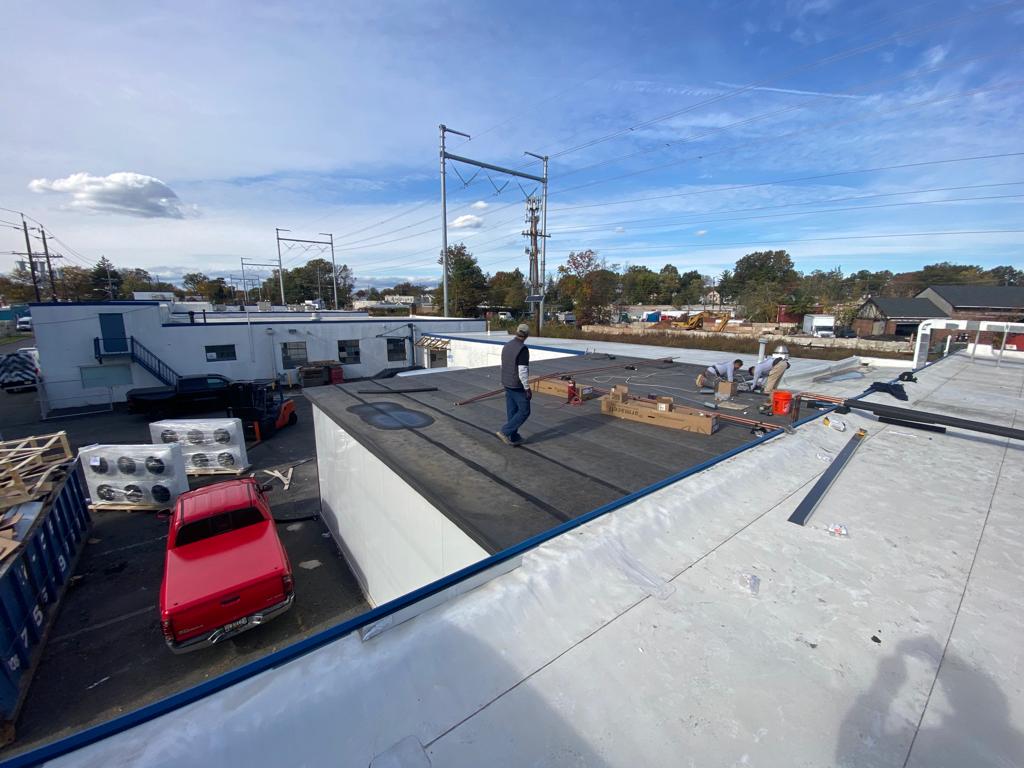
Food and beverage production runs deep in the Piedmont Triad. Greensboro and the surrounding Guilford County corridors along I- industrial belts hold bakeries, beverage and bottling plants, cold-storage and protein processors, and the co-packers that supply the region's grocery distribution. We roof those plants, and we treat them as the regulated, washdown-heavy, refrigeration-loaded buildings they are rather than as generic warehouses with a production tenant inside.
The Roof Is Part of the Food-Safety Envelope
A leak over a packaging line or an open product zone is not a maintenance call. It is a potential contamination event that pulls in the QA group, can put product on hold, and lands in the plant's records. Because of that, the materials we put over a production floor have to clear the plant's food-safety program before they go up. Not every membrane, and not every adhesive, primer, or sealant, is acceptable over a food zone; plenty of common roofing adhesives are solvent-based and have no business near open product. We confirm the membrane and every accessory against the facility's plan and the applicable USDA or FDA expectations before we spec it, not after.
Washdown Humidity Pushes Moisture Up Into the Deck
Sanitation in a processing plant means high-volume, high-temperature washdown, and that turns the production hall into a humid environment that drives moisture upward toward the roof deck. Without a properly placed vapor retarder, that interior moisture condenses inside the roof assembly and quietly corrodes a steel deck or saturates the insulation from below; and you will not see a drop on the floor until the deck is already compromised. We design the assembly to stop vapor at the warm side and keep the insulation dry, sized to how wet and how warm the interior actually runs.
Refrigeration Loads and Cold-Chain Continuity
Freezer rooms, chill rooms, and blast cells change the rules again. Over a refrigerated space the vapor drive can reverse, and the roof assembly has to maintain thermal continuity so the cold chain holds and condensation does not form inside the build-up. The rooftop also carries the weight and vibration of refrigeration equipment, condensers, and the associated piping and curbs. We size the insulation and the vapor control for the actual operating temperatures of each space, because a roof detailed for an ambient warehouse will sweat itself apart over a blast freezer.
Ponded water over a freezer is a double problem: it adds thermal load the refrigeration system has to fight, and it accelerates deck corrosion. We use tapered insulation to move water to drains and scuppers and keep standing water off the cold-room footprint entirely, then confirm the drainage plan against how the refrigeration system below is set up.
Working Around Continuous Production
Many Greensboro plants run two or three shifts with one weekly sanitation window as the only time the line is down. Any work that opens the envelope over an active production area gets confined to that window, with the production team and QA manager confirming the floor is clean and covered before we start and protected before we leave. We build the phasing around the plant's schedule and keep every opened section dried in, because the line dictates the timing here, not the roofing crew.
Rooftop Loads and Penetration Density
A processing plant carries weight on its roof that most commercial buildings never see. Refrigeration condensers, large make-up air units, exhaust fans over cook and fry lines, and the racks and piping that connect them all sit on the deck and all punch through the membrane. Before we add insulation or change an assembly, we confirm the deck can carry what is already up there plus whatever the project adds, and we treat the equipment field as the high-risk zone it is; every curb and support detailed individually rather than rushed. On a plant, the leak almost always starts at a condenser curb or an exhaust penetration, not in the open field, so that is where our attention goes.
Built for the Piedmont Climate
Greensboro summers are hot and humid and the winters bring real freeze-thaw cycling, and a food-plant roof has to take that exterior swing while a warm, wet production interior pushes moisture the other way. That two-sided pressure is exactly why the vapor control and insulation continuity have to be right; get them wrong and moisture condenses inside the assembly and rots it from within while the membrane on top still looks fine. We design the build-up for both the Piedmont's exterior cycling and the plant's interior conditions so the roof holds up on both faces.
Food Processing Facility Roofing Questions
No. The membrane and every accessory; adhesives, primers, sealants; have to be acceptable for use over a food zone under the plant's food-safety program, and many common roofing adhesives are solvent-based and not acceptable near open product. We confirm every product against the facility's plan and the applicable USDA or FDA expectations before specifying it.
High-temperature sanitation washdown makes the production hall humid and drives moisture up toward the deck. Without the right vapor retarder, that moisture condenses inside the roof assembly and corrodes the deck or soaks the insulation from below before anything shows on the floor. We design the assembly to stop vapor at the warm side and keep the insulation dry for your actual interior conditions.
Over refrigerated space the vapor drive can reverse and the assembly has to hold thermal continuity so the cold chain stays intact and condensation does not form inside the build-up. We size the insulation and vapor control to each space's operating temperature and account for the refrigeration equipment loads on the roof, because a standard warehouse detail will sweat and fail over a blast freezer.
We use tapered insulation to route water to drains and scuppers and keep standing water off the cold-room footprint, since ponding adds thermal load the refrigeration has to fight and speeds up deck corrosion. We confirm the drainage plan against how the refrigeration system below is configured.
We confine any work that opens the envelope over an active area to the weekly sanitation window, with the production team and QA manager confirming the floor is clean and covered before we start and protected before we leave. The phasing is keyed to the plant's shift schedule, and every opened section is dried in the same day.