
Funeral Home & Mortuary Roofing in Greensboro, NC
Quiet, dignified funeral home and mortuary roofing in Greensboro, NC. We schedule around visitations and services and keep preparation-room exhaust running.
Request A Roof Walk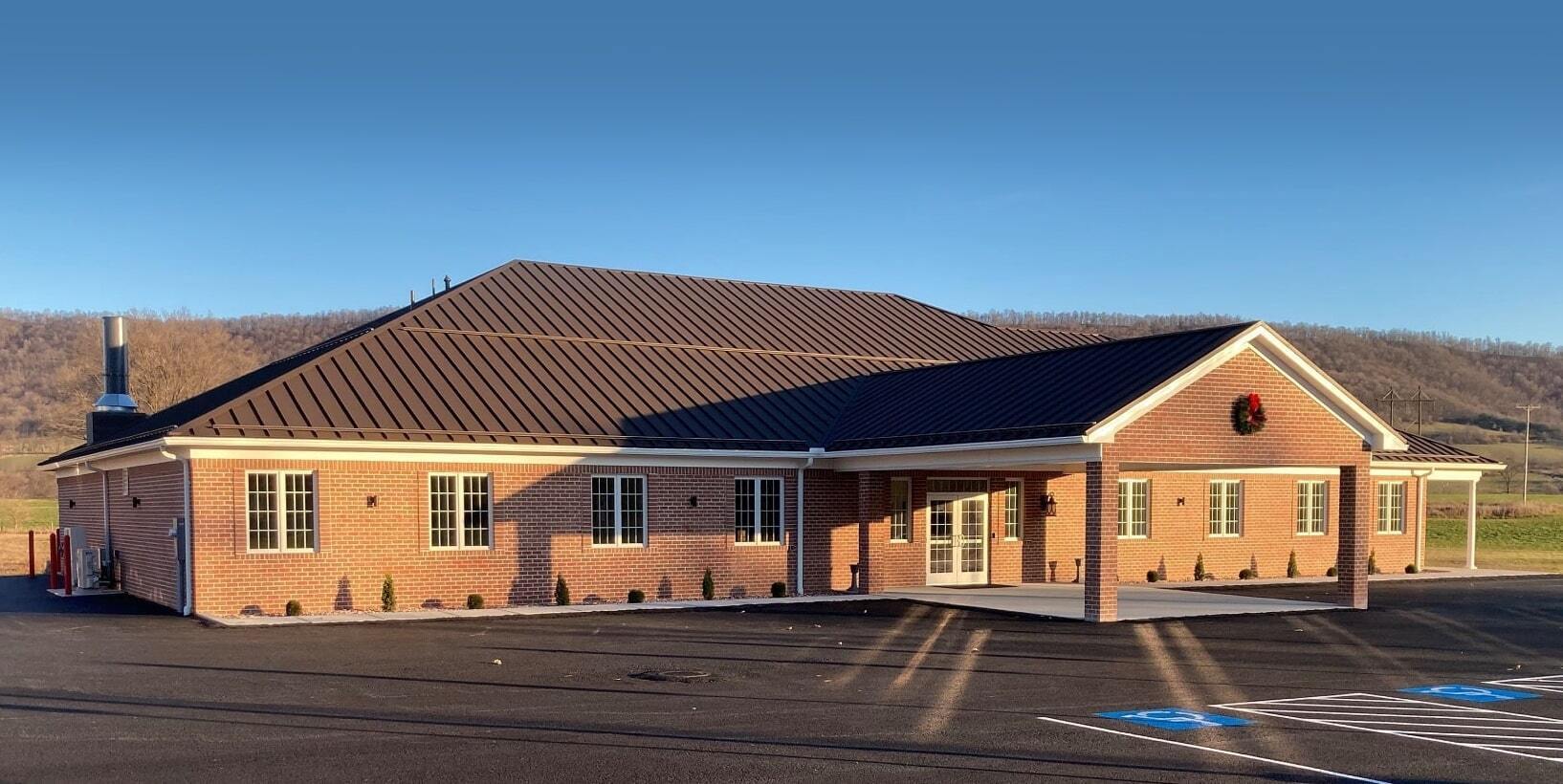
A funeral home roof has one job the building's neighbors will judge it on: it has to look composed and stay dry while families grieve underneath it. We roof mortuaries, funeral chapels, and combination funeral-and-cemetery offices across Greensboro, from the older brick establishments along West Market Street and the Fisher Park edge to the newer suburban facilities out toward Wendover Avenue and the Adams Farm side of town. The work itself is ordinary low-slope roofing. What makes it different is everything happening below the deck while we are up there.
Greensboro is a city where people stay rooted, and that shapes the funeral business here. Many of these homes are second- or third-generation family operations, and a few of the larger ones run satellite chapels across Guilford County to serve neighborhoods from Sedgefield to the High Point line. That continuity matters to us because the owner who hires us is usually the same person who answers the after-hours phone, walks families through arrangements, and notices the day a water stain shows up on the chapel ceiling. The roof is part of how that owner protects a reputation built over decades.
The Preparation Room Changes How We Sequence the Roof
Every funeral home has an embalming and preparation area, and that room dictates more of the roofing plan than people expect. Preparation rooms run under negative pressure to capture formaldehyde and other chemical vapors, and the exhaust fans that pull that air out vent straight up through the roof. Those fans cannot be shut off, capped, or blocked for our convenience, because the moment they stop, the room is out of compliance and the staff cannot work. Before we mobilize, we locate every preparation-room exhaust stack, treat the flashing around it as its own separate task, and keep the fan running the entire time we work within reach of it.
The same chemistry that the exhaust is removing also leaves its mark on the roof over time. Vapor that escapes around an aging fan curb tends to degrade the membrane and corrode unprotected metal faster in that one area than anywhere else on the roof. When we walk a mortuary roof, the zone around the prep-room stack gets a closer look than the open field, and if the curb or the surrounding membrane is breaking down, we re-detail it rather than coat over it.
Chapel Spans and the Quiet Front of the Building
The chapel is the part of the building families see, and its roof is often the trickiest. Funeral chapels are frequently built as clear-span rooms, forty to sixty feet wide with no interior columns, much like a small church sanctuary. That open span carries real wind-uplift load, and the fastening pattern and membrane we specify have to match it. Older Greensboro chapels sometimes sit on wood or lightweight concrete decks where we confirm the deck can take the attachment before we commit to an assembly. We also look hard at the porte-cochere, the covered drive where families are received. The seam where that canopy meets the main wall is the single most common chronic leak we find on funeral homes, and we re-flash it as a discrete item instead of pretending a field membrane replacement will fix it.
Scheduling Around Services, Not the Other Way Around
A funeral home is never really closed. Visitations run into the evening most nights of the week, services can be scheduled on short notice, and the building has to be calm and presentable whenever a family walks in. We build our schedule around the funeral director's calendar, not around ours. The director gives us the week's services and visitations, and we sequence loud work, staging, and deliveries so the chapel and the entry are quiet and clear during those hours. We confirm the roof is dried in and watertight before the building closes each evening, and we keep our crew, equipment, and debris out of the spaces families use.
For most flat-roofed Greensboro funeral homes we specify a 60-mil membrane over tapered insulation. The taper is usually the real fix, because these older buildings often pond water in spots the original roof never drained well, and standing water is what quietly destroys a low-slope roof over the years. On wood-decked chapel sections we verify load capacity before choosing insulation thickness. We are not interested in selling a tear-off where a sound deck and a well-detailed recover will serve the building, and we will tell you plainly which one the roof actually needs.
Documentation Families Never See but Owners Need
At closeout you get the permit and final inspection record, the manufacturer warranty registered in the building's name, a drain and flashing inspection report, and a simple roof diagram that notes the prep-room stack, the chapel span, and the porte-cochere connection. If you run more than one location in the Greensboro area, we keep that documentation consistent across each property so your records stay clean. The whole point is that the roof becomes something you stop thinking about, so you can keep your attention where it belongs, on the families you serve.
Funeral Home & Mortuary Roofing Questions
How do you work around funeral services and visitation schedules?
We plan the job from the director's weekly calendar. We get advance notice of every scheduled service and visitation, then sequence loud work and deliveries so the chapel and entry stay quiet during those hours. The roof is confirmed dried in before the building closes each evening, and we keep crews and equipment out of the spaces families use.
How do you handle the preparation room exhaust stack?
The exhaust has to keep running the whole time, so we locate the stack before mobilizing, treat its flashing as a separate scope item the director signs off on, and verify continuous fan operation during any work near it. We never cap, block, or take that stack offline to make the roofing easier.
What roof system do you specify for a funeral home?
For flat-roofed facilities, a 60-mil membrane over tapered polyiso is our standard. The taper corrects the drainage problems common on older Greensboro buildings and clears the ponding water that shortens a roof's life. Chapel sections on wood decks get a load check before we settle on the assembly.
Do you handle the clear-span chapel roof?
Yes. A chapel built as a column-free room carries real uplift load, much like a church sanctuary, so we evaluate the deck type and span and specify the fastening to match. Steel and wood decks each need their own attachment approach, which we confirm before pricing.
Can you fix the porte-cochere over the receiving drive?
Yes, and we usually find it needs attention. The joint where the covered drive meets the building wall is the most common chronic leak on funeral homes. We re-flash that transition as its own item rather than assuming a field replacement will solve it.