
Pharmaceutical & Laboratory Roofing in Greensboro, NC
Roofing for Greensboro pharmaceutical and lab buildings; leak-proof protection over cleanrooms and instruments, chemical-tolerant membrane near fume exhaust, and audit-ready closeout.
Request A Roof Walk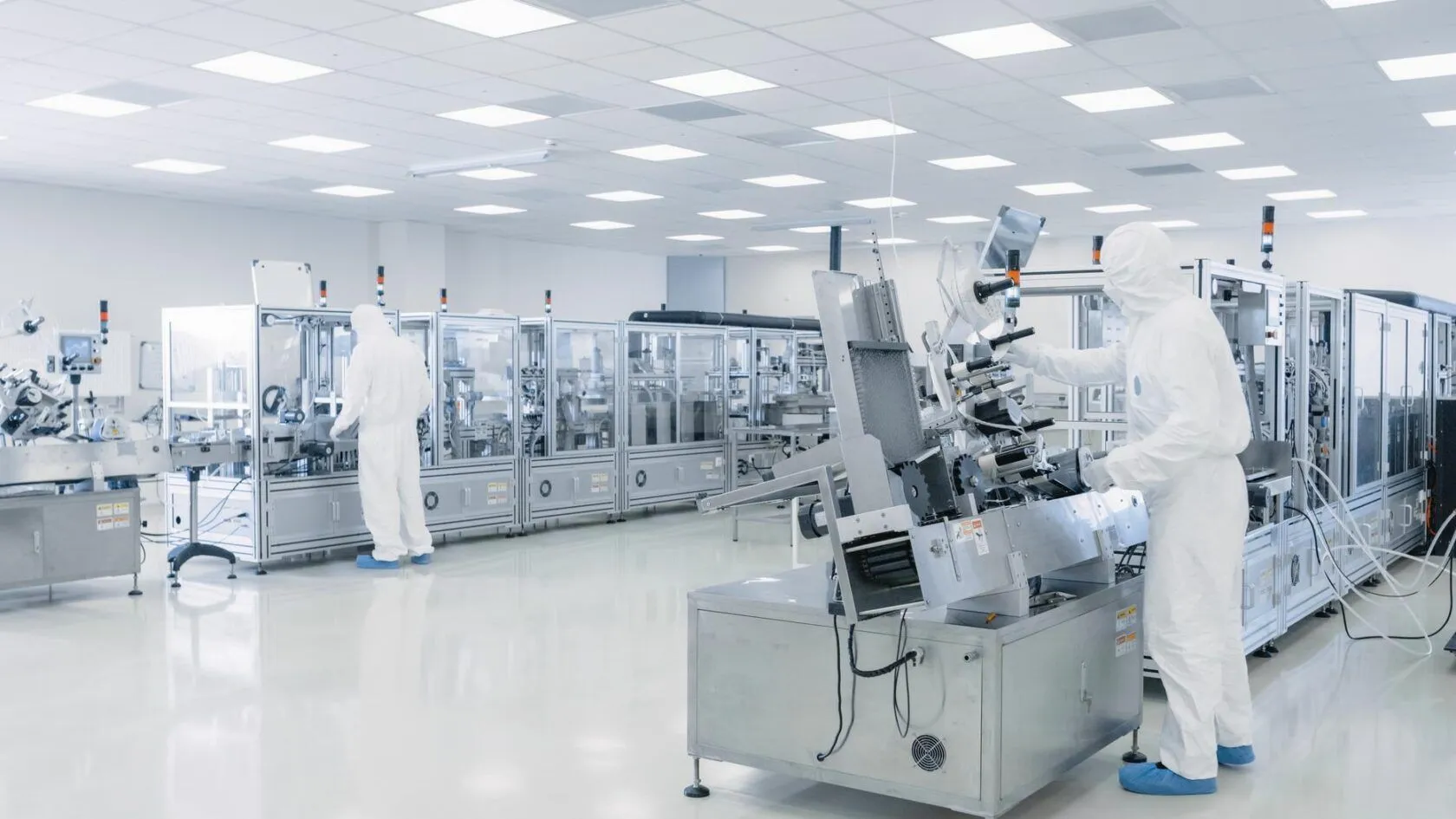
Greensboro sits inside one of the strongest life-science corridors in the Southeast. The Gateway University Research Park, the Joint School of Nanoscience and Nanoengineering, the lab buildings clustered around UNC Greensboro and NC A&T, and the analytical and contract-manufacturing tenants spread across the South Elm-Eugene and East Gate City Boulevard districts all run the kind of controlled environments where a roof leak is not a maintenance ticket. It is a deviation report, a possible batch loss, and a conversation with quality assurance. We roof these buildings with that reality in front of us the entire time.
A Leak Here Costs More Than the Roof
In an office building, a drip over a hallway is an inconvenience. Over a compounding suite, a stability chamber, or a bench running validated instruments, the same drip can quarantine product, trigger an investigation, and shut down a room until it is requalified. The dollar figure attached to that downtime usually dwarfs the cost of the roof work itself. So our planning starts from the assumption that water intrusion over a critical space is unacceptable, not merely undesirable, and we build the sequence, the temporary protection, and the daily dry-in around protecting what is underneath each section of deck.
We Map the Building Before We Map the Roof
Before a crew steps on the roof, we want to know what sits below every zone: which areas are classified cleanroom, which hold sensitive instruments, where the GMP production lines run, and where the offices and corridors are. That interior map drives everything; where we can stage, where we phase first, and where temporary leak protection has to be redundant rather than routine. A roofer who treats a lab roof like a warehouse roof is gambling with the tenant's product.
Cleanroom HVAC Curbs and Pressure
The mechanical density on a lab roof is the second hard part. Cleanrooms hold tight pressure differentials, and the air handlers, supply curbs, and exhaust trains that maintain those differentials all penetrate the roof. Flashing work near those connections can disturb the pressure regime if it is done without coordination. We work with the facility's mechanical team to schedule penetration and curb work into planned HVAC windows, and we confirm the room recovers its pressure and stays clean after we finish near a critical curb. The membrane around a cleanroom supply curb gets detailed as its own assembly, not a copy-paste boot.
Solvent and Fume Exhaust Attack the Membrane
Lab fume hoods and process exhaust push solvent vapor, and sometimes acid fume, out of stacks on the roof. Those vapors condense on the stack and drip onto whatever membrane sits downwind, and a standard membrane will chalk, soften, or degrade in that footprint while the rest of the roof looks new. Most warranties exclude exactly this. We ask the lab's engineers what each stack actually discharges, then specify a chemical-tolerant membrane; typically a reinforced PVC; in the zones around those stacks, matched to the manufacturer's chemical-resistance data so the warranty holds where it matters most.
Access, Credentialing, and Quiet Work
Regulated and research buildings control who gets in and when. Some areas require background-checked, pre-cleared personnel and escorts. We start the credentialing conversation in preconstruction so the crew is cleared before mobilization rather than losing a day at the gate, and we coordinate with the site's environmental-health-and-safety and biosafety contacts where research programs require it. Noise, vibration, and rooftop traffic over sensitive benchwork are planned around the lab's schedule, not imposed on it.
Temporary Protection and the Leak That Cannot Wait
On these buildings, what we do between work sessions matters as much as the finished membrane. Redundant temporary protection over critical zones, secured tie-offs at every opened edge, and confirmed dry-in before the crew leaves are non-negotiable, because an overnight storm over an open section above a production suite is the exact scenario we are paid to prevent. When an active leak does develop on a lab or production roof; whether we installed it or not; the response is not a next-week appointment. We mobilize for an emergency dry-in, get water away from the critical space first, and document the event so the facility's quality group has what it needs for its own investigation. That priority-response posture is part of how we hold these accounts, not an add-on service.
Built for the Greensboro Climate
The Piedmont gets hot, humid summers and real freeze-thaw swings in winter, and a lab roof has to handle that exterior cycling while a tightly conditioned interior pushes in the other direction. That combination is what makes vapor control and proper insulation continuity so important here; the wrong assembly traps moisture between a cold exterior and a warm, humidity-controlled interior and degrades from the inside. We size and detail the assembly for both sides of the wall, so the roof performs through Greensboro's swings without putting the controlled environment below it at risk.
Pharmaceutical & Laboratory Roofing Questions
Because of what is underneath it. A leak over a cleanroom, a stability chamber, or a validated instrument bench can quarantine product and shut a room down for requalification, which costs far more than the roof work. We map the interior uses first and build the phasing and temporary leak protection around protecting the critical spaces below each section of deck.
We coordinate any flashing or curb work near cleanroom supply and exhaust connections with the facility's mechanical team and schedule it into planned HVAC windows. After work near a critical curb, we confirm the room recovers its pressure differential and that no debris entered the air path. Each cleanroom curb is detailed as its own assembly.
We specify a chemical-tolerant membrane, usually a reinforced PVC, in the zones around exhaust stacks where solvent or acid vapors condense and drip. We ask the lab's engineers what each stack discharges and match the membrane to the manufacturer's chemical-resistance data, because standard membranes degrade in that footprint and most warranties exclude it.
Yes. We start credentialing in preconstruction so the crew is background-checked and cleared before mobilization, and we coordinate with the site's EHS and biosafety contacts where the research program requires it. That avoids losing a mobilization day at the gate and keeps us compliant with the building's access rules.
The full package a quality group expects: contractor qualifications, site safety plan, reviewed submittals, daily work logs, manufacturer installation records, system certification where required, and registered warranties. We deliver it in the format the facility's quality and engineering teams use so it holds up in a later audit.