
Sports & Recreation Facility Roofing in Greensboro, NC
Sports and recreation facility roofing in Greensboro, NC; long-span gym and arena decks, natatorium chloramine resistance, and event-calendar scheduling.
Request A Roof Walk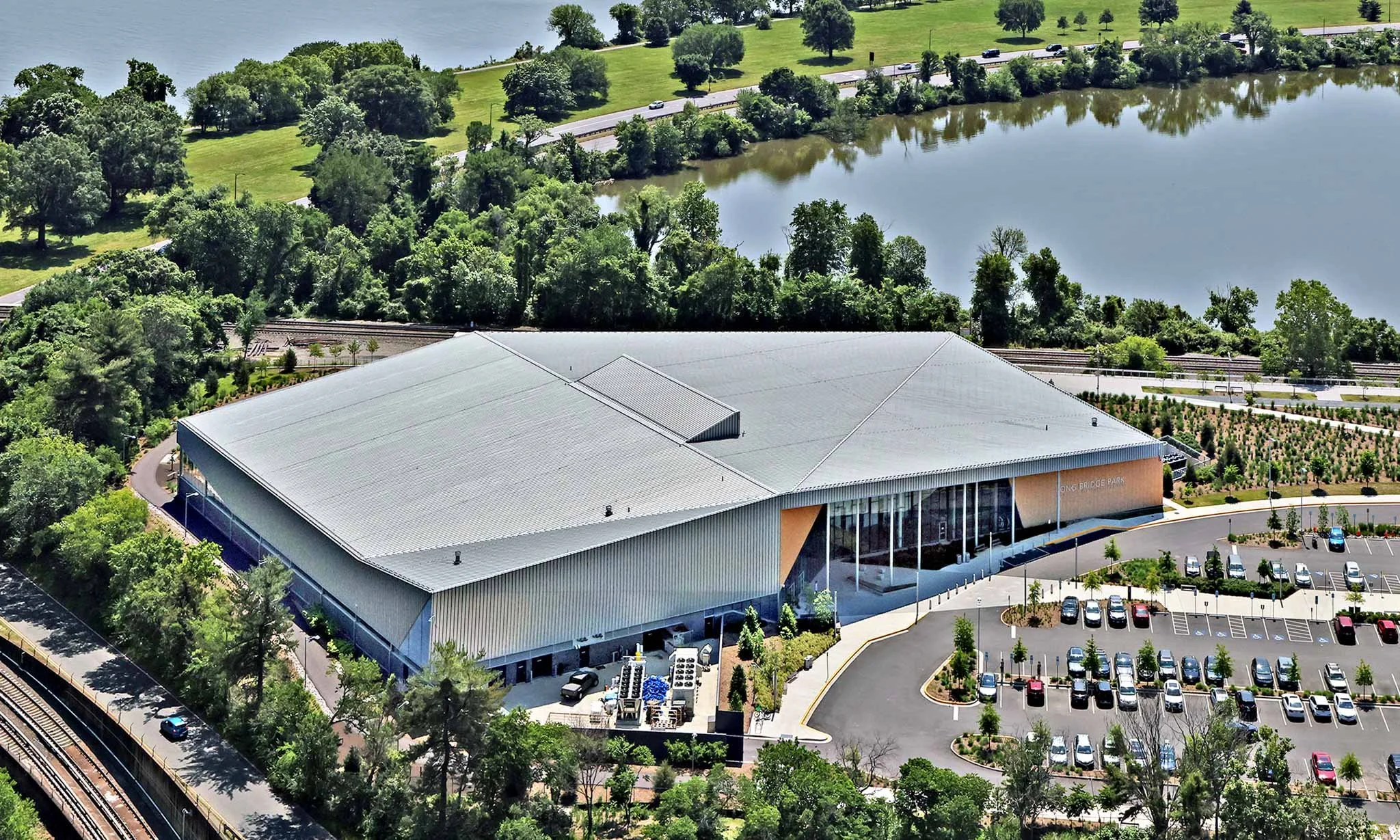
Greensboro hosts more indoor sports than a city its size has any right to. Between the Greensboro Coliseum Complex, the Greensboro Aquatic Center that has drawn national swimming and diving meets, the city's network of parks-and-rec gyms, and a steady run of regional and conference championships, this is a place that takes athletic facilities seriously, and all of those buildings sit under big, demanding roofs. We roof recreation centers, gymnasiums, indoor courts, and aquatic facilities across the Triad, and the work has almost nothing in common with putting a membrane on a flat office box.
What sets this category apart is a combination you rarely see together: very long clear-span roofs with no interior columns, intense interior humidity from athletic use and pools, and a schedule full of evenings, weekends, and holidays, which is exactly when a roofing crew would normally want the building empty. Greensboro's aquatic and arena facilities draw events year-round, so the convenient maintenance window most contractors count on simply does not exist here. We plan around that from the start instead of fighting it.
Long Spans Behave Differently Than a Normal Roof
A gymnasium or arena roof can span a hundred feet or more with nothing holding it up in the middle, much like a movie-theater auditorium but bigger and carrying live athletic loads below. Those long-span decks flex and deflect under wind, and the fastening pattern and membrane have to be specified for that movement, not pulled from a standard detail sheet. Steel deck spanning eighty feet needs a different fastener pull-out calculation than the same deck at thirty feet, and we provide the structural deck evaluation and the matching fastener spec as part of the scope, not as an afterthought when the wind starts working the seams loose.
Pools Add Humidity, and Humidity Wrecks Roofs From Below
The moment a recreation building has a pool, locker rooms, or heavy athletic occupancy, interior moisture becomes the main event. Warm, humid air rises into the roof assembly and condenses inside the insulation if the vapor retarder is in the wrong place for the climate, and Greensboro's humid, mixed climate calls for a specific vapor strategy, different from what a dry or cold region would use. Before we specify a reroof on any aquatic or high-humidity facility, we run a moisture survey, because recovering over a wet or wrongly built assembly compounds the problem instead of fixing it.
Natatoriums Are the Hardest Roofs in This Category
An indoor pool, a natatorium, is the most punishing environment we deal with under this heading. Chlorine reacts with the organic matter swimmers bring into the water and produces chloramine gas, which is heavier than air, settles over the pool, and is aggressively corrosive to ordinary roofing metal and some membrane adhesives. For a natatorium we specify stainless steel or copper flashing anywhere chloramine reaches, confirm the membrane against the manufacturer's chemical-resistance data, and choose adhesives tested for pool-hall conditions. Just as important, the ventilation has to exhaust that air out of the building rather than recirculate it up under the pool-hall roof. Standard roofing specifications do not belong over a pool, full stop.
Drainage and Ponding Are the Quiet Killers on a Big Flat Deck
A long-span recreation roof is also a very large catchment area, and that makes drainage a make-or-break detail rather than an afterthought. The Piedmont gets heavy summer thunderstorms that can dump an inch of rain in a short window, and a wide gym or fieldhouse roof has to move all of that water off fast through internal drains and overflow scuppers sized for the real load. When a long-span deck deflects slightly in the middle, which they all do, low spots form and water ponds, and standing water is the single biggest accelerant of membrane failure on these buildings. On every recreation reroof we evaluate the existing drainage, add tapered insulation crickets where water is sitting, and confirm the overflow provisions are adequate before we ever talk about membrane color or warranty length. College and university athletic buildings around town, of which Greensboro has many given its cluster of campuses, frequently inherit older roofs with exactly this ponding problem.
Public Bids, Private Clubs, and Event Calendars
A lot of recreation facilities here are public, run by the city, the county, the school system, or a YMCA, and public work brings its own rules: bid advertising, bid bonds, performance and payment bonds, and prevailing-wage compliance where it applies. We carry the bonds and insurance for public work in North Carolina and know the documentation those contracts require. Private clubs and event venues take a different procurement path but often have just as tight a calendar, driven by memberships, leagues, and bookings. Either way, we sequence gym and arena work into daytime weekday windows where possible, confirm daily dry-in before evening programming starts, and coordinate any pool-hall exhaust work with the aquatics staff so air quality over the water is never compromised mid-event.
Sports & Recreation Facility Roofing Questions
How do you handle pool and locker-room humidity in the roof assembly?
Interior vapor drive from natatoriums and high-humidity spaces needs a vapor retarder positioned correctly inside the assembly for Greensboro's climate. We review the existing insulation and vapor strategy before specifying a reroof, because recovering over a wet or misspecified assembly makes the moisture problem worse. A moisture survey before the scope is finalized is standard on any aquatic or high-humidity facility.
What materials stand up to natatorium chloramine exposure?
Chloramine gas corrodes ordinary metal flashing and aluminum edge metal and degrades some adhesives. For natatoriums we specify stainless steel or copper flashing where chloramine reaches, confirm membrane compatibility against the manufacturer's chemical-resistance data, and use adhesives tested for pool-hall environments. Standard roofing specifications are not appropriate over an indoor pool.
How do you schedule around heavy evening and weekend programming?
We work from the facility's programming calendar. Gym and arena work is concentrated in daytime weekday hours where possible, with daily dry-in confirmed before evening programming begins. For aquatic facilities we coordinate any HVAC or exhaust penetration work with the pool operations team so air exchange over the water is never interrupted during an event.
Do you handle public bid requirements for municipal facilities?
Yes. Public procurement for city recreation centers, county facilities, and school gymnasiums involves bid advertising, bid bonds, performance and payment bonds, and prevailing-wage compliance where applicable. We carry the required bonds and insurance for public work in North Carolina and know the documentation these contracts demand.
What roof systems work best for large-span gymnasium roofs?
Long-span gym roofs typically use a 60-mil or 80-mil membrane mechanically attached over polyiso insulation. The attachment has to match the actual deck type and span, since steel deck at eighty feet needs different fastener calculations than the same deck at thirty feet. We provide the deck evaluation and fastener specification as part of every long-span gymnasium scope.