
Hail Damage Restoration in Greensboro, NC
Hail Damage Restoration for Greensboro commercial buildings. Roof inspection, documentation, repair, maintenance, and replacement planning.
Request A Roof Walk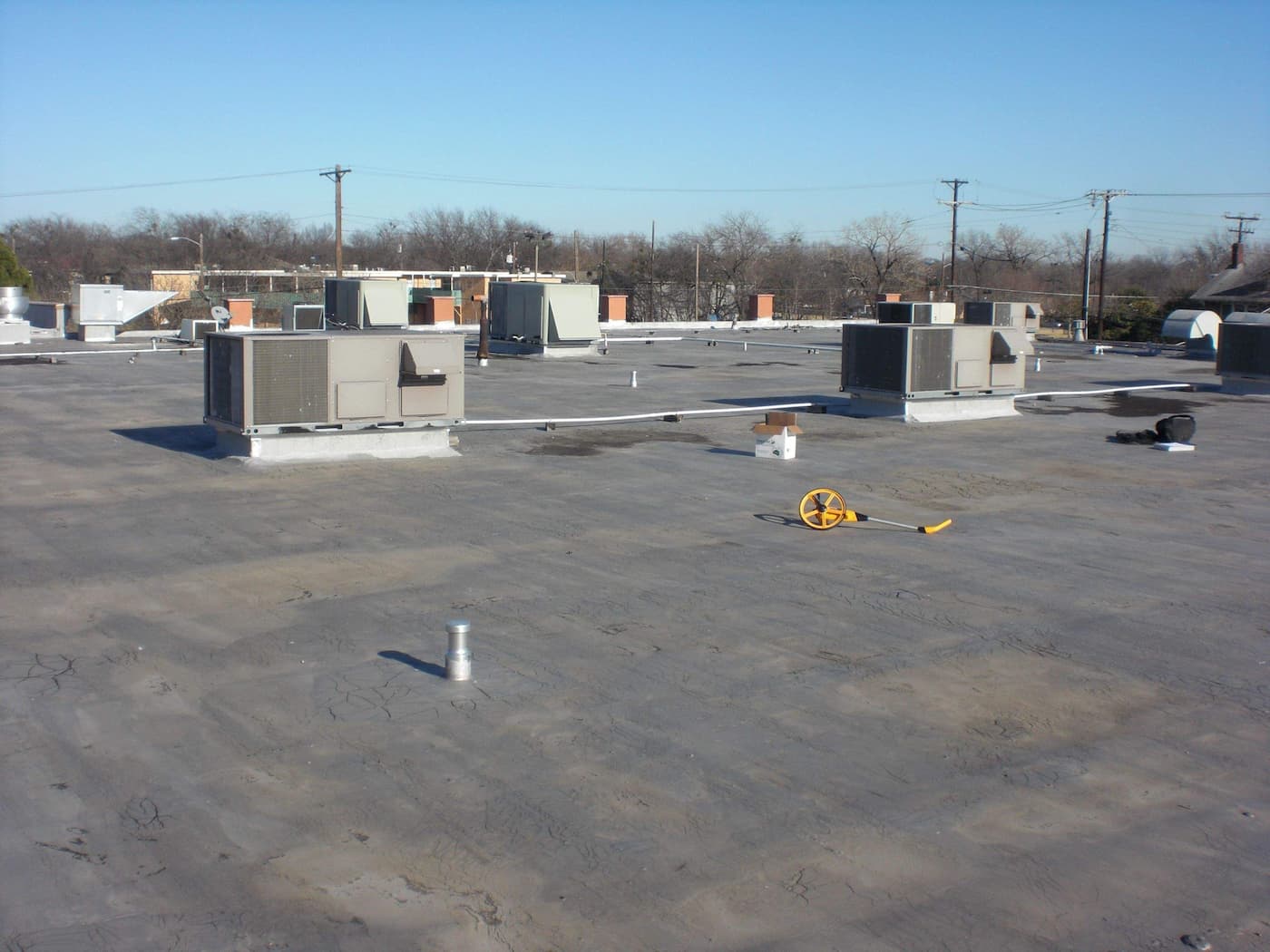
The first useful note for Hail Damage Restoration is usually written at the hatch, after we see drainage, traffic, equipment, and the way the building is actually used. On a hail damage restoration call, we want the roof age if it is known, the exact leak locations, the tenant schedule, the safest access point, and the reason the roof question became urgent. For this service, we write first-party roof notes because the person reading the file may be an owner, a facility director, a property manager, a GC, or a lender trying to understand risk before money is spent.
For the work, Greensboro-High Point is promoted as a logistics hub at the crossroads of four major interstates and positioned halfway between New York and Miami, and that matters because roof work in the Piedmont Triad often involves truck timing, crane access, warehouse shifts, school calendars, and buildings that cannot simply close while a roof is opened. Our first this scope pass separates the emergency condition from the capital decision, so a wet ceiling tile does not automatically turn into a rushed replacement and an old roof does not get patched until the deck condition is understood.
For these services, we document the field membrane, edge metal, penetrations, drains, scuppers, roof-to-wall transitions, rooftop units, previous repair chemistry, and traffic paths. We do not pretend this service can be solved by coating wet insulation, recovering over trapped moisture, or patching only the visible drip without tracing the entry point. The work scope has to match what the roof is doing under sun, rain, wind, and normal building use.
For this scope, Guilford County economic-development materials say companies in the Greensboro-High Point area can reach more than half of the United States population within a one-day drive. For these services, we use that local fact because an airport-area roof, a South Elm adaptive-reuse building, and a medical office near downtown do not create the same access or disruption problem. A this service roof over a wide industrial building may need equipment routes and dry-in zones; a smaller office roof may need tenant communication, edge protection, and an after-hours inspection window.
The practical inspection for the work starts with dry roof observations and then moves to evidence that proves where water is traveling. On this scope, we look at low points after rain, rust trails under edge metal, split pitch pockets, open laps, old mastics, backed-out screws, soft insulation, and interior stain maps. When these services conditions are safe to walk, those notes become a repair map; when they are unsafe or saturated, the same notes become a replacement or recover conversation.
For this service, FedEx, UPS, Amazon, and major retail distribution centers are identified as anchors of the local supply-chain cluster. For the work, that is a real planning constraint, especially when a roof supports inventory, students, patients, guests, or manufacturing equipment. We plan this scope around noisy work, odors, debris protection, access ladders, material staging, and daily dry-in around the business below the roof. A these services scope that ignores the building operation usually costs the owner more than the line item suggests.
Weather risk changes how we prioritize this service. The Piedmont Triad gets enough thunderstorm activity that the work planning has to check drains, edge securement, coping joints, gutter capacity, and temporary repairs before the next hard line of weather. When wind-driven rain tests this scope, open seams and weak details become obvious; when hail is involved, we check membrane bruising, coating fractures, metal edge damage, rooftop-unit fins, and the difference between cosmetic marks and functional damage.
For these services, Piedmont Triad International Airport is tied to more than 1,000 acres of development-ready land and more than $100 million in expansion work. We keep code and permit assumptions out of guesswork on this service by documenting roof area, deck type, insulation, existing layers, fire classification questions, and attachment method. That helps the owner compare a the work repair proposal against a recover or replacement proposal without mixing incompatible assumptions, and it keeps manufacturer questions in the right lane without inventing a certification, warranty, or approval.
Budget and next-step documentation
Budget conversations for this scope are clearer when each option has a roof reason. A these services repair should say what detail failed and what evidence supports the fix. A this service maintenance recommendation should identify repeat tasks and inspection cadence. A the work recover option should state why moisture and layer count allow it. A this scope replacement scope should explain tear-off, temporary dry-in, insulation, deck repairs, edge metal, drains, safety, and closeout documents.
For these services, the Piedmont Triad aerospace corridor includes nearly 200 aerospace companies, with names such as Honda Aircraft, Boom Supersonic, Marshall Aerospace, AAR, and Textron Aviation cited in local development materials. For this service, that kind of named local context keeps the recommendation from becoming generic. A the work file may involve a retail roof near Friendly Center, a research building on East Gate City Boulevard, a logistics roof near PTI, or a downtown roof with limited staging, and each one needs a different order of operations even if the membrane product is similar.
We write this scope roof notes so the next decision is easier to defend. For these services, that means photos labeled by roof area, a short explanation of likely water entry, immediate containment steps, near-term repair recommendations, capital risk, and any unknowns that require core sampling, infrared review, manufacturer input, or a return visit after rain. The owner reviewing this service should be able to forward the file without needing a separate translation call.
The next step for the work is not a canned pitch. Send the this scope address, roof age if available, interior leak photos, access instructions, and any lease or tenant restrictions. We will respond with a these services roof walk plan, the evidence we need to collect, and the safest way to move from immediate protection to a responsible scope for Greensboro commercial roofing work.
What information should we send before a this service roof walk?
Send the building location, access instructions, roof age if known, leak photos, tenant restrictions, and any previous roof reports. For the work, that lets us arrive with the right ladder, safety plan, and inspection focus.
Can this scope be handled while the building stays occupied?
Often yes, but the answer depends on access, odor, noise, material staging, and how much roof must be opened. We phase these services work around dry-in, tenant protection, and the operating schedule below the roof.
How do we compare repair, recover, and replacement for this service?
We compare evidence. Moisture, layer count, deck condition, drainage, age, and future use decide whether the work belongs in a repair file, a restoration file, a recover plan, or a replacement budget.
Do you promise manufacturer certification or insurance approval for this scope?
No. We do not invent credentials or promise claim outcomes. We document conditions, identify manufacturer or warranty questions, and keep contractor-side these services documentation tied to reviewable roof facts.
What makes Greensboro planning different for this service?
The mix of PTI-area logistics, downtown redevelopment, healthcare, campuses, and older industrial buildings changes access and risk. We plan the work around the actual building and the business underneath it.