
Wind & Storm Damage Roof Insurance Claims in Greensboro, NC
Severe thunderstorm winds and the occasional remnant of a Gulf or Atlantic tropical system reach the Piedmont Triad most years. We document wind damage on the roof so the claim reflects what actually happened up there.
Request A Roof Walk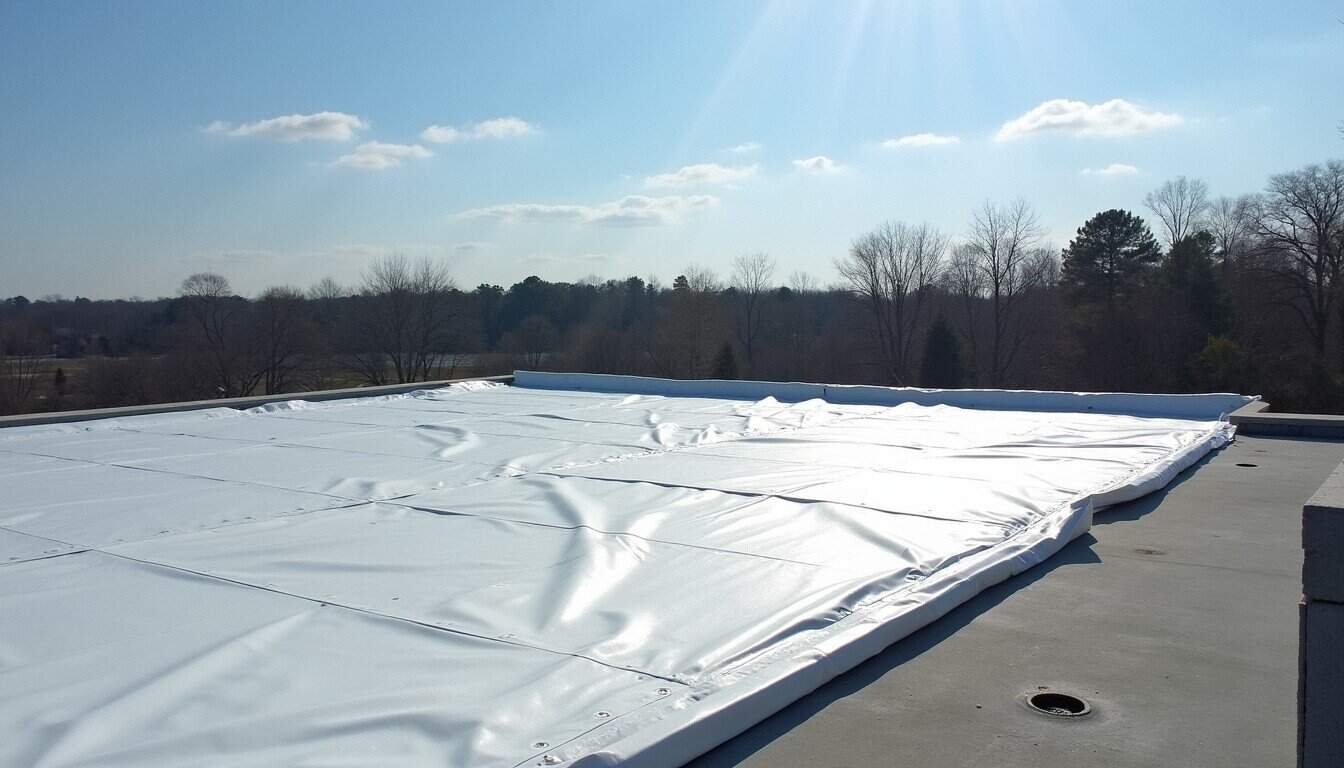
Wind claims on a commercial roof usually trace back to one of two things: sustained straight-line wind lifting the membrane at a weak seam or edge detail, or windborne debris tearing or puncturing the roof surface. The Piedmont Triad sees both. Spring and summer bring frequent severe thunderstorm activity, and on occasion the remnant winds of a tropical system that made landfall on the Gulf or Atlantic coast track far enough inland to push sustained gusts across Guilford County. The National Weather Service classifies a thunderstorm as severe once it produces winds of 58 miles per hour or stronger, one-inch hail, or a tornado, and any of those can leave a commercial roof with damage that isn't visible from the parking lot.
The building type changes what wind damage looks like. Older mechanically fastened membranes on converted textile and furniture-era buildings near downtown and South Elm Street tend to show uplift starting at the perimeter, where fastener spacing is tightest under code but also where wind pressure concentrates first. The large, flat warehouse and distribution roofs along the Piedmont Triad Airport corridor - where FedEx runs a regional air hub near Honda Aircraft Company, HAECO Americas, and Cessna - carry enormous membrane fields that can billow and walk under sustained wind even when the perimeter holds, which produces a different damage pattern the file has to describe accurately.
What we document after a wind event
We look at lifted or torn membrane, pulled or backed-out fasteners, separated edge metal and coping caps, torn or displaced flashing at curbs and walls, and any debris punctures or scrapes across the field. Where wind drove rain sideways into open laps or lifted seams, we trace interior staining back to the entry point rather than assuming the nearest penetration is the source. Photos are labeled by roof area and tied to the storm date so the claim reads as a record of one event, not a general condition report.
Interior evidence matters as much as roof-level evidence in a wind claim. Ceiling stains that appear during or right after a storm, especially ones that show up along a specific wall or in a specific room, help tie the roof damage to a date and location. We ask for interior photos and a rough timeline alongside the roof inspection, since an adjuster comparing roof evidence against interior evidence from the same event has an easier time approving the full scope.
Meeting the adjuster on a wind claim
We walk the roof with the adjuster when the visit is scheduled and point directly to the uplift pattern, the torn sections, and any secondary damage that follows from the primary failure, like insulation that got wet once the membrane opened. We don't argue what the policy covers. We make sure the scope accounts for the full extent of what wind did to the roof, including sections that look intact from a distance but have pulled fasteners or compromised seams underneath.
Repair or full replacement after wind damage
A localized tear or a run of lifted perimeter membrane is often a repair, provided the deck and insulation underneath stayed dry. When wind has opened enough of the field that multiple sections need new membrane, or when saturated insulation shows up across a wide area once we pull back the damaged sections, we document why the more defensible scope is a larger recover or full replacement rather than a series of patches.
Secondary damage that follows a wind event
Wind rarely stops at the membrane. A lifted section can pull rooftop unit curbs loose, crack the caulking around a skylight or hatch, or knock loose a satellite mount or conduit run that then punctures the roof on its own. We note that secondary damage separately from the primary wind failure, since it's often a smaller line item but still belongs in the claim file. On buildings with rooftop mechanical equipment, which is common across Greensboro's office and light-industrial stock, we also check whether the unit itself shifted on its curb, which can be a mechanical claim as much as a roofing one.
We're your roofing contractor, not a public adjuster. We inspect, document, and build an accurate damage scope so you and your insurance adjuster are working from the same facts. Filing and negotiating the claim itself stays with you or your adjuster.
How do you tell wind damage from ordinary wear on an older roof?
Wind damage has a pattern that follows the storm: pulled fasteners in a line along the perimeter, torn seams on the windward side, or debris strikes concentrated where objects would have blown across the roof. General wear looks different - it's spread evenly and isn't tied to a specific date.
Do you need an exact wind speed for a claim?
Not from us. We document what the roof shows and the date of the event; matching that to recorded wind speeds or storm reports for the claim is typically handled by your insurer or public adjuster.
Can a wind claim include damage we didn't notice until weeks later?
Sometimes, if the roof file and interior evidence support a delayed leak from the same storm. We document what we can trace to the event and note where the connection is less certain.
Will you meet the adjuster if the building has multiple roof sections?
Yes. We walk every affected section with the adjuster and keep the documentation organized by roof area so nothing gets attributed to the wrong section of the building.
What if wind damage is limited to flashing and edge metal only?
That's still worth documenting. Edge metal and flashing failures are common wind-claim items on their own and don't always require a full membrane claim.