
Hail Damage Roof Insurance Claims in Greensboro, NC
Hail damage on a commercial roof is often invisible from the ground and easy to underestimate from a windshield survey. We inspect the membrane itself and document what a hail event actually did before the claim goes in.
Request A Roof Walk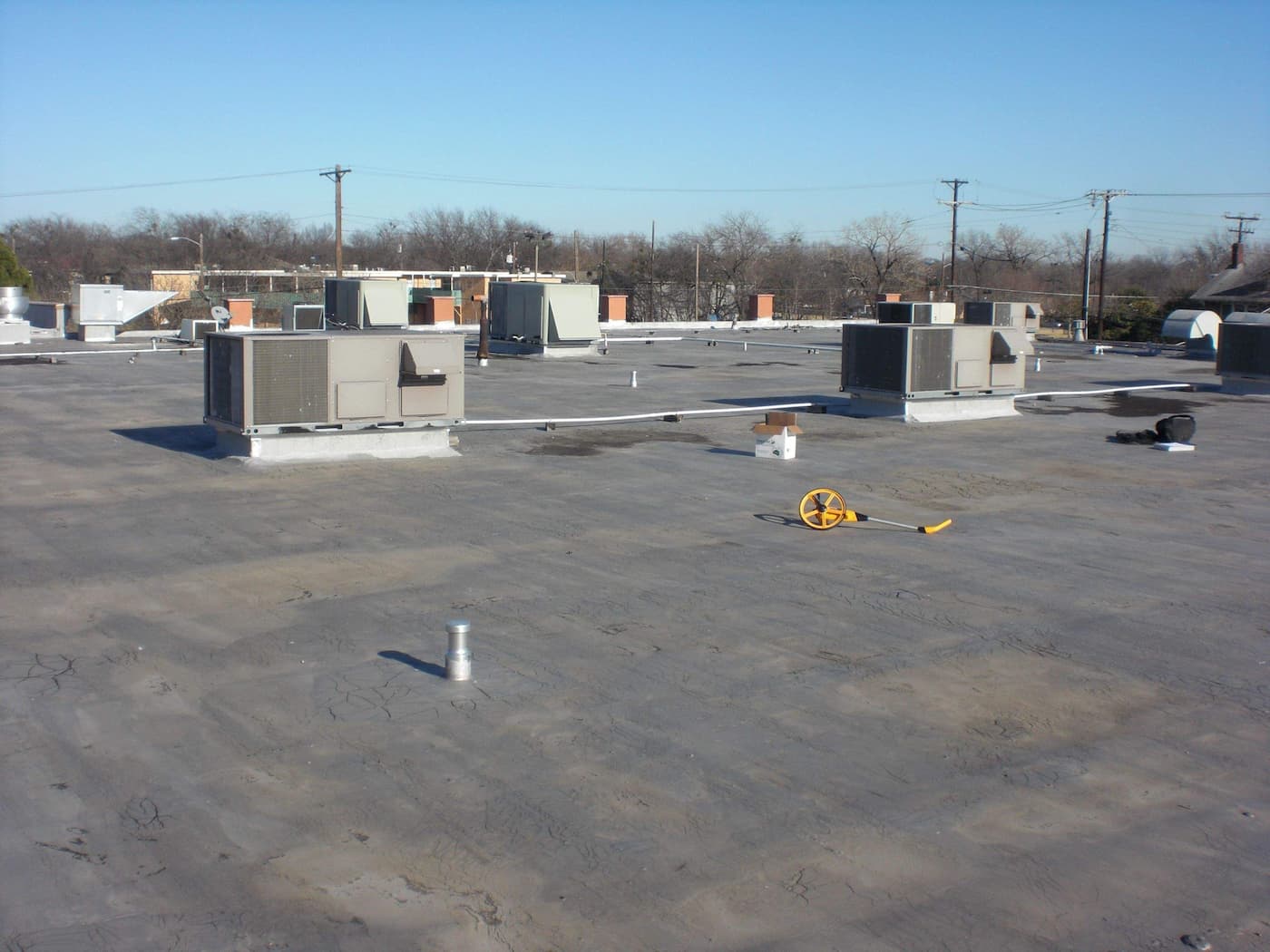
Piedmont Triad hail comes with the same spring and early-summer severe weather pattern that produces the region's strongest thunderstorms, and it rarely announces itself the way wind damage does. A parking lot full of dented cars is an obvious sign; a low-slope commercial roof with hail bruising can look untouched from below while the membrane above has taken real damage. That gap is why hail claims get denied more often than they should - the adjuster sees a roof that appears fine and the owner doesn't have the documentation to show otherwise.
What hail leaves behind depends on the membrane. On TPO and PVC single-ply roofs, hail impact shows up as circular bruising or fracturing in the surface that can be hard to see without close inspection, sometimes confirmed by cutting a small test sample. On modified bitumen and built-up roofs common on older Greensboro buildings near downtown and South Elm Street, hail impact tends to fracture the granulated surface and can crack the underlying felts. On standing seam and R-panel metal roofs, which show up often on newer warehouse and distribution buildings along the Piedmont Triad Airport corridor, hail leaves visible dents and can compromise the finish coating even where the panel itself hasn't failed structurally. We inspect for the damage pattern specific to the roof in front of us rather than assuming one type of evidence applies everywhere.
Documenting hail bruising by roof area
We map the roof into sections and record impact density in each one, since hail damage is rarely uniform across a large commercial roof - wind during the storm often concentrates strikes on one side or one section more than another. We photograph representative impacts close up with a scale reference, note any impacts near penetrations, drains, and rooftop units where a fracture is more likely to become an active leak, and check rooftop unit fins and curb flashing, which take hail damage the same way the field membrane does.
Test squares - marked sample areas measured out on the roof where every impact is counted - are a common way to estimate hail density across a large roof without inspecting every square foot at the same level of detail. We use them on bigger roofs, particularly the large warehouse and distribution fields along the airport corridor, and record impact counts per test square so the density figures in the claim are based on an actual count rather than an estimate from walking the perimeter.
Meeting the adjuster after a hail event
Hail claims benefit from a roof walk more than almost any other claim type, because the damage is hard to evaluate from photos alone. We walk the roof with the adjuster, point to marked impact areas, and, where it's useful, cut a small test sample so the membrane's condition below the surface is part of the record. We don't tell the adjuster what the policy should pay; we make sure the scope reflects the density and location of impacts we actually found.
Repair, recover, or full replacement after hail
Scattered, low-density hail bruising on a roof with plenty of remaining membrane life can sometimes be addressed with a coating or targeted repair. Dense impact across a wide area, or bruising on a membrane that's already near the end of its service life, is a different scope, and we document the impact count and membrane condition that supports a recover or full replacement recommendation rather than a patch that won't hold.
Manufacturer questions and warranty coverage
Hail damage can raise a separate question from the insurance claim: whether the existing membrane's manufacturer warranty is still intact, and whether hail impact is excluded from it. We don't speak for the manufacturer or promise a warranty outcome, but we document the membrane type, approximate installation age if known, and impact evidence in a form that can be forwarded to the manufacturer or their representative if the owner needs that answer alongside the insurance claim.
We're your roofing contractor, not a public adjuster. We inspect, document, and build an accurate damage scope so you and your insurance adjuster are working from the same facts. Filing and negotiating the claim itself stays with you or your adjuster.
Can hail damage a commercial roof without any visible dents?
Yes, especially on single-ply membranes like TPO and PVC, where impact can fracture the material without leaving an obvious dent the way it does on metal. That's part of why a ground-level look isn't enough.
How soon after a hailstorm should the roof be inspected?
As soon as it's safe to walk the roof. Fresh hail marks are easier to identify and photograph clearly, and an early inspection gives you documentation before any secondary weather adds new damage to the same area.
Does every hail mark mean the roof needs to be replaced?
No. Impact density and membrane condition decide that. Light, scattered marks on a roof with years of service life left are often a repair; dense impact across a large area is a different conversation.
Will you cut test samples to check the membrane below the surface?
When it's useful for the claim, yes. A small test cut can show whether the membrane has fractured through, which is often the deciding evidence for how a hail claim gets scoped.
Do metal roofs need different documentation than membrane roofs?
Yes. Metal roofs show dents and finish damage that read differently than the bruising on single-ply or the fracturing on modified bitumen, so we document each roof type on its own terms.